
$59.00
USD
Research Use Only (RUO) • Not for Human or Veterinary Use • Not for Consumption.
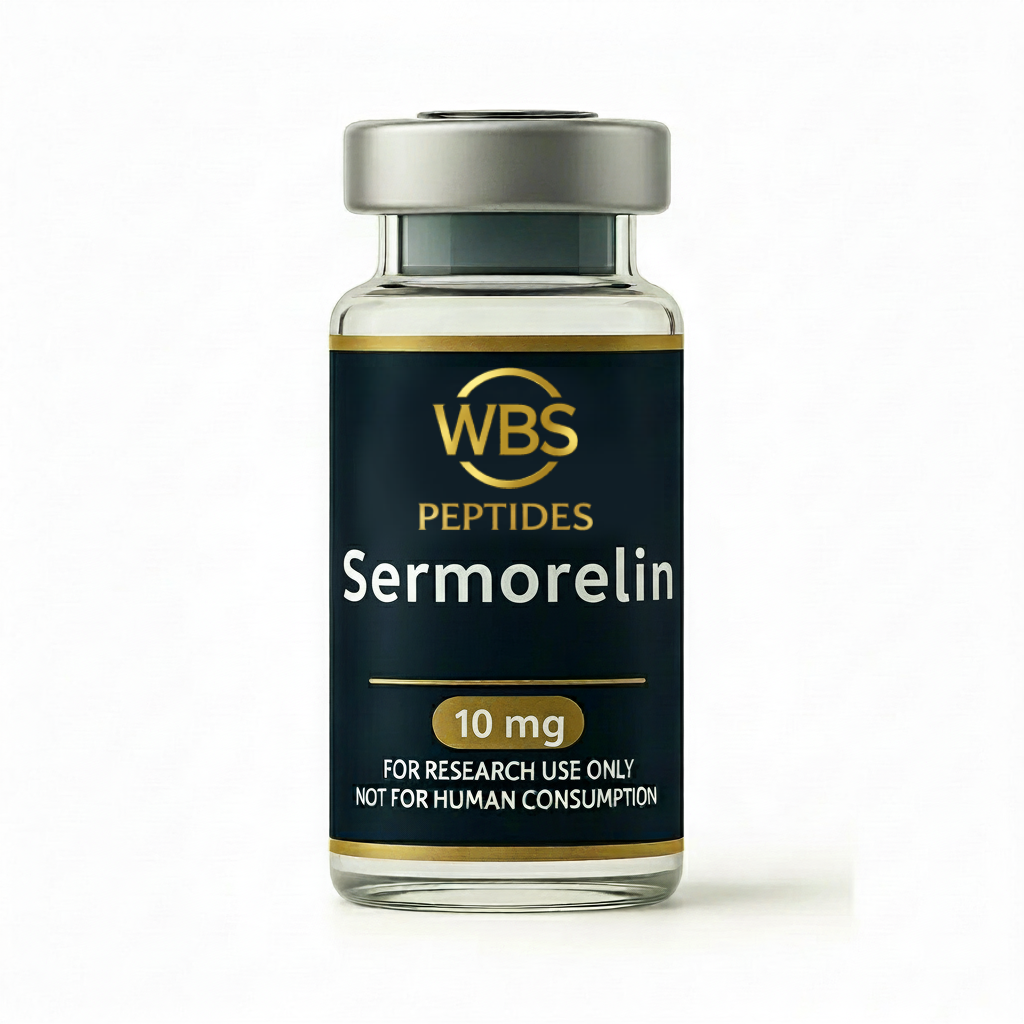
Sermorelin (GRF 1-29) is a synthetic research peptide derived from Growth Hormone-Releasing Hormone (GHRH). Also referenced as GRF 1-29, this peptide represents the first 29 amino acids commonly discussed in receptor-interaction literature. Peptides Skin supplies sermorelin research peptide strictly for in-vitro and non-clinical laboratory research focused on growth hormone signaling, endocrine pathway modeling, and pituitary receptor studies.
This product is supplied strictly as a research chemical and is not approved for human consumption, injection, supplementation, cosmetic use, diagnostic use, or veterinary administration.
Sermorelin is frequently referenced as a GHRH analog used in controlled research models to explore pituitary GHRH receptor activity and downstream signaling behavior. Its 29-amino-acid structure is commonly described in research contexts as a practical tool for studying endogenous growth hormone release pathways and endocrine regulation within laboratory systems.
The 29-amino-acid structure of GRF 1-29 is widely discussed in peptide research as preserving receptor interaction characteristics associated with GHRH receptor signaling, while remaining suitable for standardized workflows in controlled research environments. This can support experimental design where researchers examine pathway activation and regulatory feedback within endocrine-focused models.
In non-clinical research, sermorelin is commonly described as a selective GHRH receptor agonist in laboratory context. It is referenced in studies examining receptor activation on pituitary-associated cell models and pathway-linked signaling behavior (e.g., cAMP-dependent signaling) associated with endogenous hormone-release mechanisms. This content is provided for research reference only and does not imply clinical outcomes.
Sermorelin is frequently discussed in scientific literature as a research tool for examining pulsatile endocrine signaling, hormone rhythm modeling, and pathway feedback behavior in controlled systems. Researchers may select a sermorelin research peptide when focusing on regulated endocrine pathway activation rather than introducing external hormones in mechanistic experiments.
Growth hormone pathways are often explored in laboratory models linked to metabolic signaling and standardized endpoints. Sermorelin appears in research contexts related to protein turnover pathways, lipid metabolism signaling, and cellular energy regulation readouts within endocrine-focused study design. Any mention of mechanisms refers exclusively to controlled research models.
Research interest may also include the relationship between endocrine signaling and tissue models, including skin-related laboratory readouts and experimental repair pathways studied under controlled conditions. Sermorelin enables researchers to investigate these mechanisms through pathway-level endocrine signaling models without implying therapeutic application.
Working with lyophilized sermorelin requires sterile technique and consistent preparation steps aligned with your protocol and laboratory SOP. Stability depends on storage, handling, and preparation conditions. Reconstituted solutions are typically maintained under refrigerated conditions for short-term use according to laboratory procedures, while long-term stability is generally supported by frozen storage of lyophilized material.
Sermorelin is often compared in research discussions to HGH and other growth hormone–related peptide tools. While HGH represents an external hormone input, sermorelin (GRF 1-29) is referenced for pathway-level study of endogenous release signaling and feedback behavior in mechanistic models.
In research comparisons, sermorelin is commonly described as acting via GHRH receptor activation, whereas ipamorelin is referenced as a growth hormone secretagogue studied through different signaling routes. This distinction can help researchers choose tools that match specific receptor and pathway objectives in controlled experiments.
Peptides Skin supplies sermorelin acetate (GRF 1-29) with batch testing via HPLC and mass spectrometry to support consistent research workflows. Batch documentation and Certificate of Analysis (CoA) availability may vary by lot and is available upon request.
| Chemical Name | Sermorelin Acetate (GRF 1-29) |
|---|---|
| CAS Number | 86168-78-7 |
| Molecular Formula | C149H246N44O42S |
| Molar Mass | 3357.9 g/mol |
| Appearance | White lyophilized powder |
| Solubility | Water, bacteriostatic water, laboratory-grade saline (protocol-dependent) |
| Testing | HPLC / Mass Spectrometry (batch tested) |
| Documentation | CoA available upon request |
| Grade | Research Use Only (RUO) |
Selecting a trusted research peptide supplier is essential for reproducibility. Peptides Skin provides sermorelin research peptide with quality-focused documentation support, batch traceability, and shipping practices designed to maintain product integrity for qualified research institutions.
Sermorelin (GRF 1-29) is a synthetic GHRH-derived research peptide referenced in laboratory studies of growth hormone signaling and endocrine pathway modeling. Supplied strictly as RUO.
No. This product is supplied strictly as Research Use Only (RUO) and is not approved for human or veterinary use, consumption, diagnosis, or treatment.
GRF 1-29 refers to the first 29 amino acids commonly discussed in GHRH-related research literature. Sermorelin is frequently referenced under this name in peptide research contexts.
In research context, sermorelin is often described as a GHRH receptor agonist used to study pathway activation and signaling behavior in controlled laboratory systems.
In research discussions, HGH represents an external hormone input, while sermorelin is referenced for studying pathway-level signaling associated with endogenous release mechanisms and feedback behavior in mechanistic models.
Sermorelin is commonly discussed as acting via GHRH receptor activation, whereas ipamorelin is referenced as a secretagogue studied through different signaling pathways. Selection depends on experimental objectives.
Store lyophilized sermorelin at −20°C for long-term stability, protected from light. After preparation, follow your protocol and laboratory SOP and avoid repeated freeze–thaw cycles.
Yes. A batch-specific Certificate of Analysis (CoA) is available upon request for qualified laboratories and research institutions.
WhatsApp us