
$49.00
USD
Research Use Only (RUO) • Not for Human or Veterinary Use • Not for Consumption.
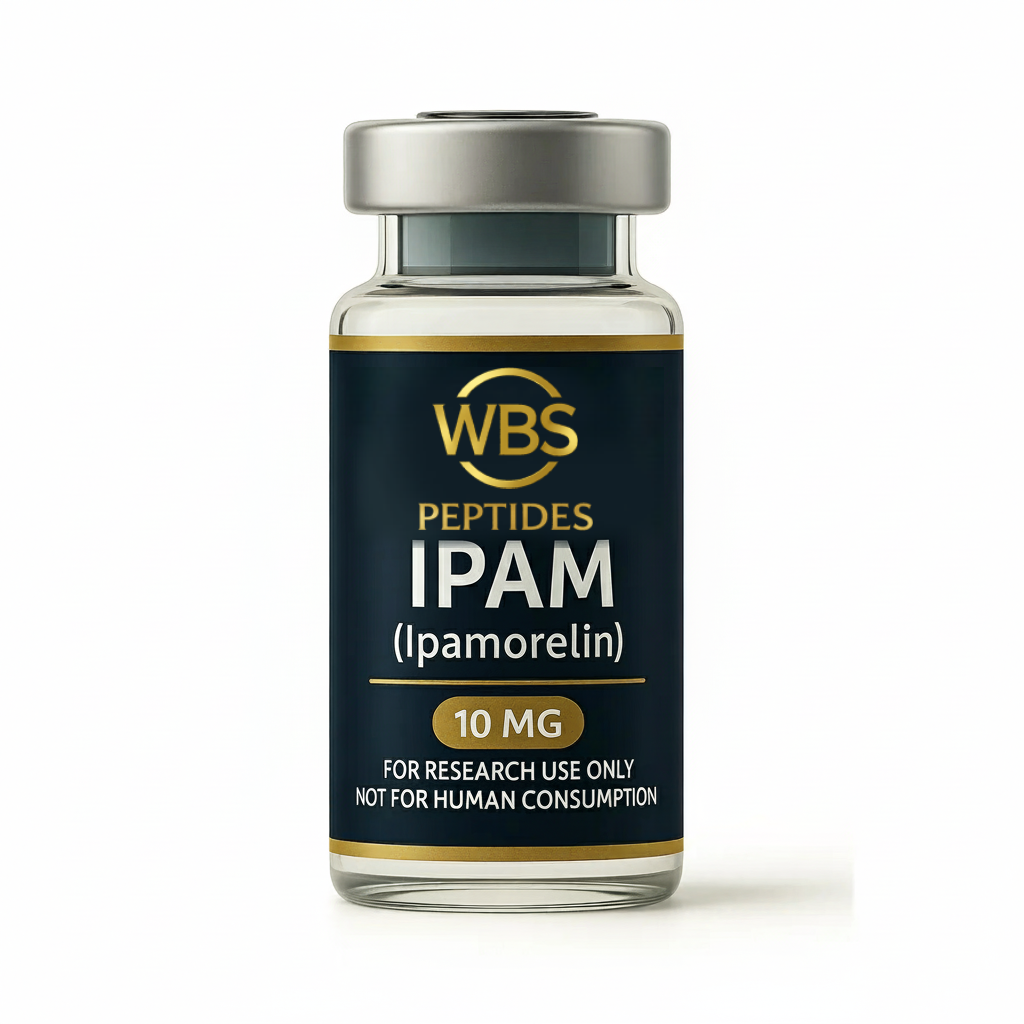
Ipamorelin peptide is a synthetic pentapeptide widely used in controlled research models as a selective growth hormone secretagogue receptor (GHS-R1a) agonist. In laboratory settings, ipamorelin is selected to study GH pulsatility signaling, receptor selectivity, and downstream pathway readouts in defined experimental systems.
| Chemical Name | Ipamorelin Acetate |
|---|---|
| Sequence | Aib-His-D-2-Nal-D-Phe-Lys-NH2 |
| CAS Number | 170851-70-4 |
| Molecular Formula | C38H49N9O5 |
| Molecular Weight | 711.85 g/mol |
| Purity | ≥99% (HPLC verified; lot-specific CoA) |
| Appearance | White lyophilized powder |
| Solubility | Water, sterile saline, or bacteriostatic water (per SOP) |
For reproducibility, reference the lot-specific Certificate of Analysis (CoA) for purity and analytical documentation.
In research models, ipamorelin is characterized as a selective agonist of GHS-R1a, the receptor commonly associated with ghrelin signaling. This selectivity supports studies that focus on receptor-driven pathways and GH pulse-like signaling patterns in controlled experimental conditions.
Researchers often compare ipamorelin vs GHRP-2 and ipamorelin vs GHRP-6 to evaluate differences in receptor selectivity, signaling profiles, and study design fit. Selection depends on model system, endpoints, and protocol requirements.
Ipamorelin is used in laboratory research across multiple experimental frameworks, including receptor studies and pathway mapping where GH-related signaling is relevant. Typical RUO research contexts include:
A common experimental design explores ipamorelin with CJC-1295 to study combined pathway inputs within GH signaling workflows. These studies remain strictly in non-clinical, controlled laboratory investigations, with protocol details defined by the research institution.
Ipamorelin peptide is a synthetic research peptide commonly used in laboratory models as a selective GHS-R1a agonist to study GH-related signaling pathways and receptor-driven readouts.
The ipamorelin CAS number is 170851-70-4.
Purity is verified by HPLC and supported by lot documentation (CoA). Many labs request HPLC/MS reports for traceability and consistency.
Researchers compare receptor selectivity and signaling profiles in their specific model systems. The best choice depends on your protocol and endpoints.
No. Ipamorelin from Peptides Skin is supplied strictly For Research Use Only (RUO) and is not intended for human or veterinary use.
Store lyophilized ipamorelin at −20°C, protected from light and moisture, and follow your laboratory SOP for handling and solution stability.
WhatsApp us