
$39.00
USD
Research Use Only (RUO) • Not for Human or Veterinary Use • Not for Consumption.
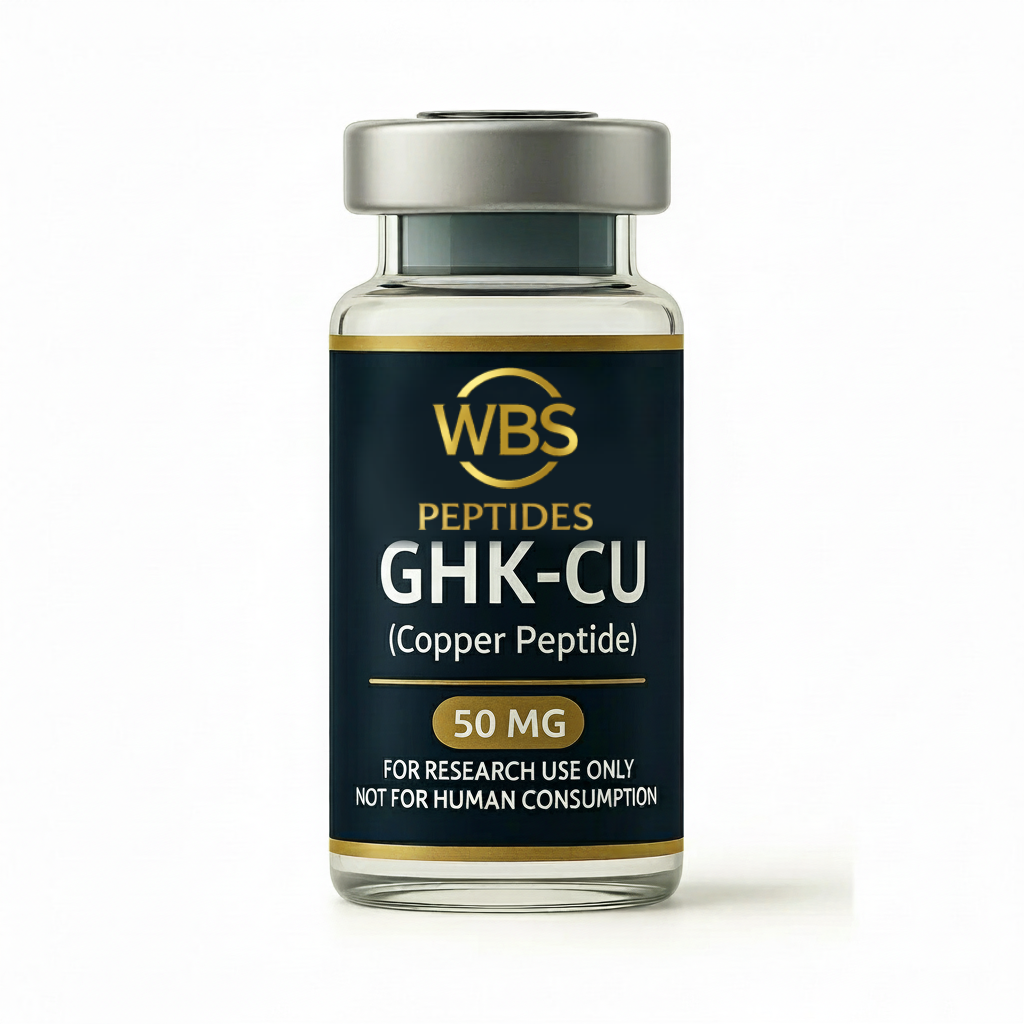
GHK-Cu peptide (also known as Copper Tripeptide-1, GHK Cu, or a copper peptide complex) is supplied as a research-grade copper–peptide complex for in-vitro and laboratory investigations. Our lyophilized GHK-Cu supports workflows that require high purity, batch consistency, and lot documentation.
| Product Name | GHK-Cu (Copper Tripeptide-1) |
|---|---|
| Synonyms | GHK Cu, Copper peptide, Copper Tripeptide-1 |
| CAS Number | 49557-75-7 |
| Complex / Identity | Gly-His-Lys (GHK) copper(II) complex |
| Molecular Formula | C14H24N6O4Cu |
| Purity | ≥99.0% (HPLC verified; lot-specific CoA) |
| Form | Lyophilized blue powder |
| Solubility | Water, saline, and common laboratory buffers |
| Available Strengths | 50 mg • 100 mg |
| Documentation | Certificate of Analysis (CoA) / SDS on request |
| Use | Research Use Only (RUO) |
GHK-Cu is a small copper–peptide complex studied in laboratory research for copper-binding behavior and how copper–peptide complexes may relate to cellular signaling in controlled experimental systems. GHK-Cu is also described in scientific literature as naturally occurring in biological environments. All statements here refer to pre-clinical and in-vitro research context only.
Researchers may use GHK-Cu (Copper Tripeptide-1) in controlled settings for studies such as:
Each batch is supported by a Certificate of Analysis (CoA) documenting analytical testing and lot traceability. Purity is verified by HPLC and reported per lot, helping laboratories maintain consistent documentation in research protocols. Many researchers specifically look for GHK-Cu HPLC and CoA when sourcing research-grade material.
GHK-Cu peptide (Copper Tripeptide-1) is a copper–peptide complex supplied for laboratory research to study copper binding and related signaling pathways in controlled experimental models.
Yes. GHK-Cu is commonly referred to as Copper Tripeptide-1. It is the GHK tripeptide complexed with copper(II).
The GHK-Cu CAS number is 49557-75-7.
Purity is verified using HPLC and documented on the lot-specific CoA. This supports traceability and consistency for laboratory workflows.
“Research grade” indicates the material is supplied for laboratory research workflows with analytical documentation (such as HPLC purity and CoA), and is not intended for clinical, therapeutic, or cosmetic use.
Store lyophilized GHK-Cu at −20°C, protected from light and moisture, and follow your laboratory SOP for handling and solution stability.
No. This product is labeled strictly For Research Use Only (RUO). It is not intended for human or veterinary use, including cosmetic or topical use.
WhatsApp us