
$69.00
USD
Research Use Only (RUO) • Not for Human or Veterinary Use • Not for Consumption.
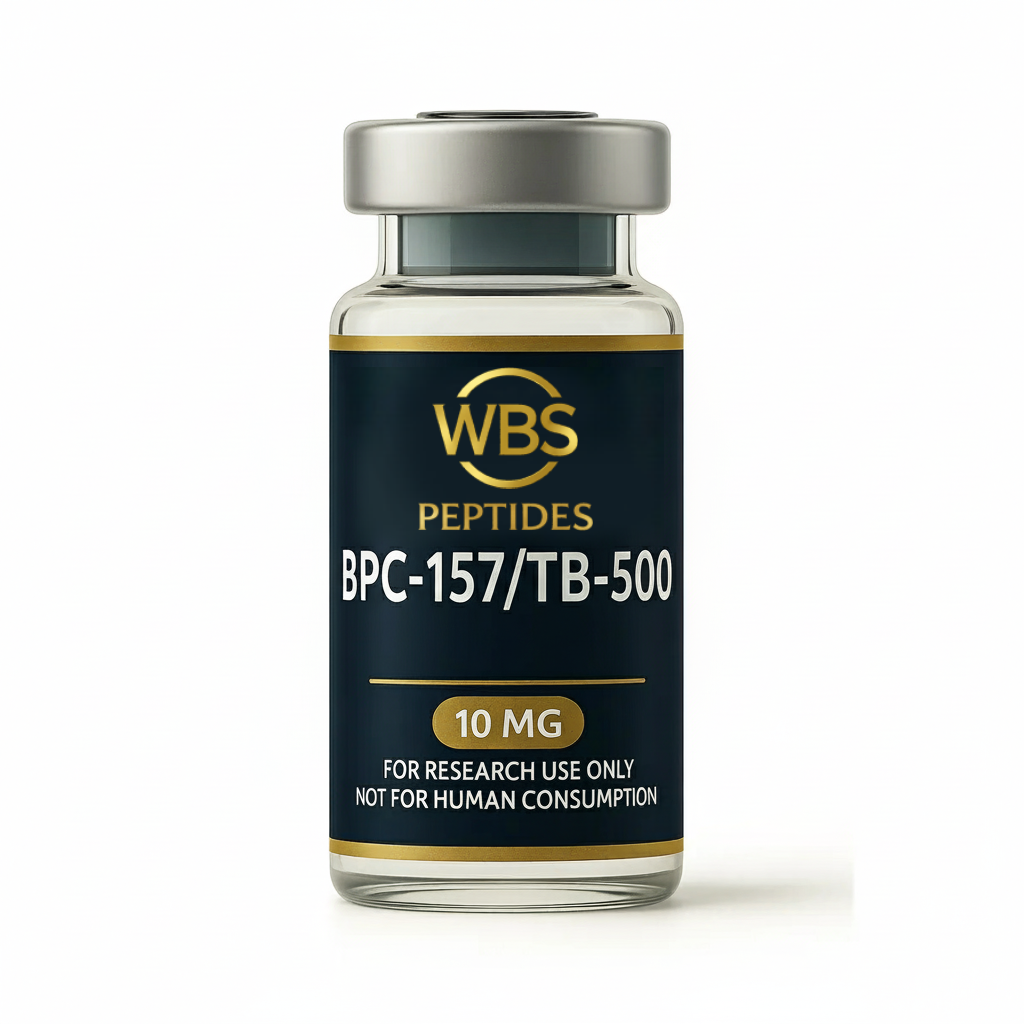
The BPC-157 TB-500 blend is a dual-peptide research peptide blend supplied in lyophilized powder form for controlled in-vitro laboratory workflows. This product is commonly referenced in research contexts that explore cell signaling, cell migration, cytoskeletal dynamics, and angiogenesis-related pathways.
Researchers prioritize documentation and batch consistency. Lot-specific Certificates of Analysis (CoA) and analytical verification (HPLC/MS) support traceability and reproducible workflows.
BPC-157 + TB-500 Peptide Blend
Lyophilized (freeze-dried) powder
10mg (5mg BPC-157 + 5mg TB-500)
≥99% (HPLC verified; CoA per lot)
White / off-white lyophilized powder
Impurities ≤1.0% (see CoA); identity supported by HPLC/MS (per lot CoA)
Note: Sequence details can vary by reference and should be confirmed from the lot-specific CoA to ensure accuracy for your protocol.
BPC-157 peptide is referenced in research literature for studies involving cell signaling, cell migration patterns, and angiogenesis-related pathway assays under controlled experimental conditions.
TB-500 peptide is discussed in research contexts related to actin-binding, cytoskeletal organization, and cellular movement models used for mechanistic pathway exploration.
In RUO settings, researchers may use this blend to explore non-clinical endpoints such as:
In controlled laboratory models, the BPC-157 + TB-500 blend is discussed in research contexts that examine cell signaling, cell migration, cytoskeletal dynamics, and angiogenesis-related pathways using protocol-defined endpoints.
This blend is supplied as a lyophilized peptide powder. Handling and preparation should follow institutional SOPs and appropriate laboratory safety controls.
Purity is verified by HPLC and identity is supported by mass spectrometry (MS). Lot-specific CoA documentation supports traceability.
No. This product is labeled strictly Research Use Only (RUO) and is not intended for human or veterinary use, including injection, ingestion, topical application, or cosmetic use.
No. All descriptions refer to non-clinical research context only. No health, therapeutic, or outcome claims are made or implied.
For reproducibility, labs should confirm composition and analytical details using the lot-specific Certificate of Analysis (CoA) and internal QC records.
WhatsApp us